
Breathable Finishes for Modern Walls
Limewash in Dallas for walls that need vapor-permeable protection and Old-World depth without synthetic coating
Prestige Designer Surfaces applies traditional limewash throughout Dallas–Fort Worth when you want a mineral finish that moves with the substrate and develops natural texture over time. This service is for homeowners, architects, and designers who need a breathable alternative to latex paint on properly prepared drywall or masonry. Limewash is slaked lime diluted with water—not a paint—and it carbonates into the surface rather than sitting on top as a film.
The application requires clean, porous drywall finished to Level 5 standards or bare plaster and masonry that can accept mineral saturation. Texas heat and low humidity accelerate the curing process, so timing between coats and temperature during application affect how the lime sets. You will see mottling and natural variation in the surface as the lime dries unevenly, which is part of the intended aesthetic, not a defect.
If you are planning a project in the Dallas area that calls for authentic lime finishes, reach out to discuss substrate evaluation and preparation requirements.
What Happens During a Limewash Application
You begin with surface preparation that removes any sealers, oils, or latex coatings that would block absorption. Limewash bonds through suction, so the wall must be able to drink in the slurry. The material is mixed on-site from hydrated lime powder and water, then applied with a masonry brush or trowel in thin, saturated layers that soak into the substrate rather than building a surface film.
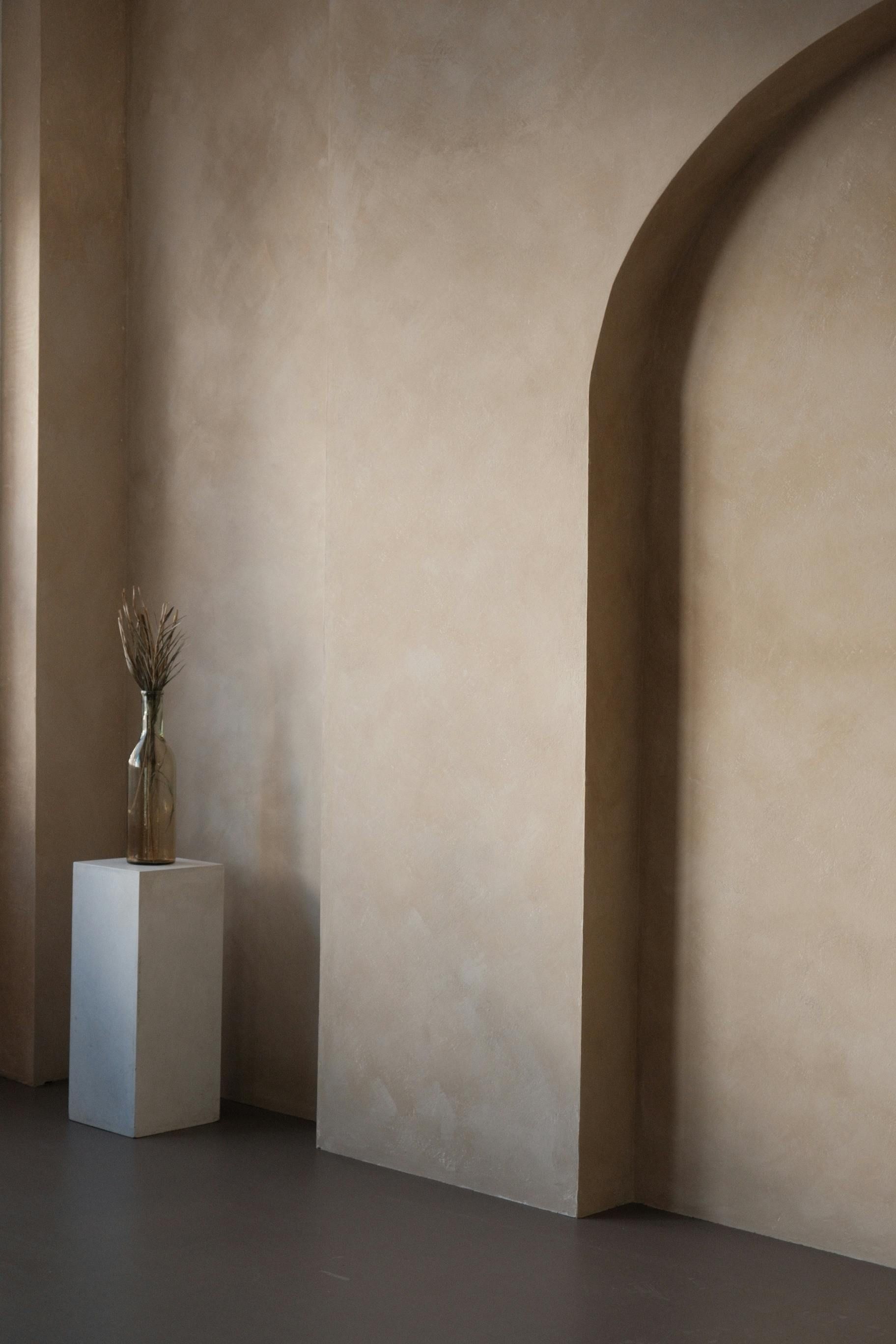
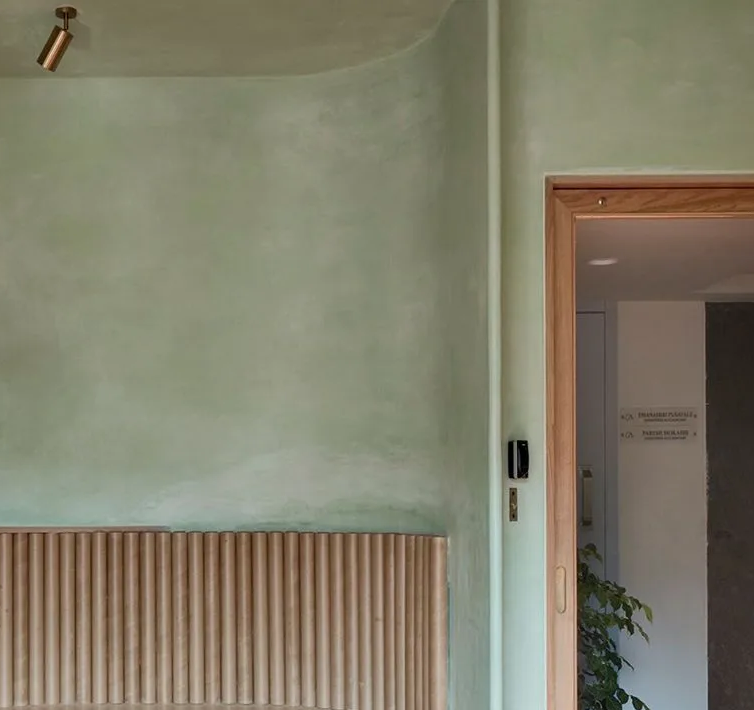
After the final coat cures, your walls will show soft color variation and a chalky, matte surface that changes slightly as the lime continues to carbonate over the first weeks. Prestige Designer Surfaces works with the natural behavior of the lime rather than fighting it, so the finish reflects the hand application and environmental conditions during install.
Each coat must cure before the next is applied, and drying time shifts with temperature and airflow. The finish will not have the uniform appearance of rolled latex—it will show brushstrokes, tonal shifts, and areas of higher and lower saturation. This is the correct result for a traditional limewash system and the reason it is specified for projects that reject industrial uniformity.
What to Know Before You Commit
Limewash is not a cosmetic overlay—it requires the right substrate and realistic expectations about how mineral finishes behave in occupied spaces.
What makes limewash different from lime paint?
Limewash is pure slaked lime and water with no binders or resins, so it remains vapor-permeable and develops patina as it ages. Lime paint includes additives that make it behave more like latex, which reduces breathability and changes the long-term appearance.
How does limewash hold up in Dallas humidity and heat?
Texas summers speed the carbonation process, which helps the finish harden faster, but low indoor humidity during winter months can slow curing if HVAC systems strip moisture from the air. You may see powdering on the surface during the first month, which is normal as excess lime dustings off.
Why does Level 5 drywall matter for limewash?
Limewash is translucent when wet and shows every trowel ridge, joint shadow, and surface imperfection as it dries. Without a perfectly smooth and uniform substrate, you will see the drywall flaws telegraphing through the finish, which undermines the clean look most designers expect.
When should you avoid limewash?
Do not use limewash over sealed drywall, glossy paint, or any surface treated with stain blockers or primers that form a vapor barrier. The lime will not bond and will powder or flake off within weeks.
What does the finish feel like after it cures?
The surface will have a dry, chalky texture that rubs off slightly when touched, especially in the first weeks. This is lime bloom and will reduce as carbonation completes. You can burnish the surface with a trowel or stone to reduce chalking and add subtle sheen.
What makes limewash different from lime paint?
Limewash is pure slaked lime and water with no binders or resins, so it remains vapor-permeable and develops patina as it ages. Lime paint includes additives that make it behave more like latex, which reduces breathability and changes the long-term appearance.
How does limewash hold up in Dallas humidity and heat?
Texas summers speed the carbonation process, which helps the finish harden faster, but low indoor humidity during winter months can slow curing if HVAC systems strip moisture from the air. You may see powdering on the surface during the first month, which is normal as excess lime dustings off.
Why does Level 5 drywall matter for limewash?
Limewash is translucent when wet and shows every trowel ridge, joint shadow, and surface imperfection as it dries. Without a perfectly smooth and uniform substrate, you will see the drywall flaws telegraphing through the finish, which undermines the clean look most designers expect.
When should you avoid limewash?
Do not use limewash over sealed drywall, glossy paint, or any surface treated with stain blockers or primers that form a vapor barrier. The lime will not bond and will powder or flake off within weeks.
What does the finish feel like after it cures?
The surface will have a dry, chalky texture that rubs off slightly when touched, especially in the first weeks. This is lime bloom and will reduce as carbonation completes. You can burnish the surface with a trowel or stone to reduce chalking and add subtle sheen.
Prestige Designer Surfaces evaluates your walls before quoting limewash work, because not all drywall or plaster is ready to accept mineral saturation. If you are working with a design team in Dallas–Fort Worth and need guidance on whether your substrate will support a lime-based system, contact us for a site review.